
Master Smart Trading With Professional Guidance
Learn forex, synthetic indices, automation, and smart trading strategies through a premium modern learning experience.
Featured Courses

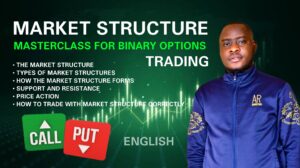
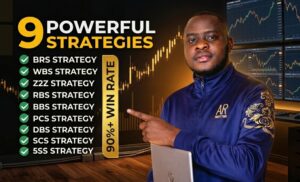
Key Learning Topics
Binary Options
Binary options trading is a financial instrument where traders predict whether the price of an asset will rise or fall within a specific period of time. The word "binary" means there are only two possible outcomes: you either win a fixed return or lose the amount you invested in the trade.
Although prediction-based trading existed long before the internet, modern binary options became widely known during the early 2000s when online brokers introduced simplified trading platforms for retail traders. Originally, binary options were mainly used by professional institutions and were traded over-the-counter between banks and large financial firms. Later, online platforms made them accessible to ordinary people using smartphones and computers.
Their popularity exploded because they were simple to understand compared to traditional Forex or stock trading. Beginners were attracted by fast trade execution, small starting capital, fixed risk, and simple UP or DOWN decisions.
Today, binary options are commonly traded on: Currency pairs, Stocks, Commodities, Indices, Crypto, Synthetic markets.
Advanced binary contracts include: Rise/Fall, Higher/Lower, Touch/No Touch, Matches/Differs, Over/Under, Even/Odd.
Binary options trading is based on predicting the future direction of price movement.
Example: Suppose EUR/USD is currently trading at 1.1000. You believe price will rise within 5 minutes. You place Trade amount: $10, Direction: UP for 5 minutes. If price closes above your entry price after 5 minutes, you win the trade. If price closes below your entry, you lose the trade. The profit is usually fixed beforehand.
Example: Stake: $10, Payout: 85%. If you win: Profit = $8.50. If you lose: Loss = $10. This fixed-risk structure is what makes binary options unique.
1. Rise/Fall: Predict whether price will rise or fall. Most common type beginners use.
2. Higher/Lower: Predict whether price will finish higher or lower than a target price.
3. Touch/No Touch: Predict whether price will touch a certain level before expiry.
4. Over/Under: Predict whether the last digit of price will be over or under a selected number.
5. Even/Odd: Predict whether the last digit will be even or odd.
Beginners: Many start because it looks simple, requires small capital, gives fast results.
Scalpers/Short-Term Traders: People who enjoy quick trades and fast market action often prefer binary options.
Synthetic Indices Traders: On platforms like Deriv, many focus on synthetic indices because they run 24/7, have continuous volatility, and do not depend on real-world news.
Experienced Technical Analysts: Some use chart analysis and strategies to trade binary options professionally.
1. Simple To Understand: Easier for beginners. Usually only choose UP or DOWN.
2. Fixed Risk And Fixed Profit: Before entering, you know how much you can lose or gain.
3. Fast Results: Trades can last 5 seconds, 1 minute, 5 minutes, 15 minutes, or hours.
4. Small Starting Capital: Many platforms allow $5, $10, or $20 to start.
5. Many Assets To Trade: Forex pairs, Stocks, Cryptocurrencies, Commodities, Synthetic indices.
6. Demo Accounts Available: Practice without risking real money.
7. No Complex Calculations: No lot size, spread, or swap fee calculations.
1. Very High Risk: One small price movement can make you lose the full amount risked.
2. Fast Trading Encourages Gambling Behavior: Overtrading, chasing losses, emotional decisions.
3. Limited Profit Compared To CFDs: Profit is fixed. Even if price moves massively, payout stays same.
4. Market Manipulation Concerns: Unregulated platforms may have price manipulation or withdrawal problems.
5. Addiction Risk: Fast nature can become addictive, leading to bigger losses.
6. Short Expiry Times Increase Pressure: 5-second or 1-minute trades create stress, panic, emotional decisions.
1. Never Use Your Full Balance: Risk 1%, 2%, or 5% maximum per trade.
2. Avoid Martingale Strategy: Increasing trade size after losses destroys accounts fast.
3. Use A Trading Strategy: Trend analysis, support/resistance, candlestick patterns, confirmation signals.
4. Control Emotions: Never trade because you are angry, want revenge, or desperate to recover losses.
5. Set Daily Limits: Stop after 3 losses or after reaching target profit.
6. Practice On Demo First: Build confidence, discipline, strategy understanding.
7. Avoid Trading During High Volatility News: News spikes make short-term predictions harder.
Beginner: $10 – $50+ → Learning platform navigation, understanding trade psychology, practicing risk management.
Intermediate: $100 – $300+ → Proper stake management, strategy testing, better emotional control.
Forex (Foreign Exchange)
The foreign exchange market, commonly called Forex or FX, is the global marketplace where currencies are bought and sold. Although currency exchange has existed for centuries through trade between nations, the modern Forex market began to take shape after World War 2.
In 1944, world leaders created the Bretton Woods Agreement, a system designed to stabilize global currencies after the war. Under this arrangement, most currencies were tied to the US Dollar, while the US Dollar itself was backed by gold at a fixed rate of $35 per ounce.
Everything changed in 1971 when US President Richard Nixon ended the gold convertibility of the US Dollar. This event, known as the "Nixon Shock," officially collapsed the Bretton Woods system and allowed currencies to float freely according to supply and demand. This moment is considered the birth of the modern Forex market.
During the 1980s and 1990s, banks and financial institutions began using computers and electronic communication systems to trade currencies faster. As internet technology improved, online brokers opened the market to ordinary retail traders.
Today, Forex has become the largest financial market in the world, with over $7 trillion traded daily. Unlike stock markets that open and close in one country, Forex operates continuously for 24 hours a day, five days a week through four major trading sessions:
- Sydney Session
- Tokyo Session
- London Session
- New York Session
Because these sessions overlap, traders around the world can participate almost anytime.
Forex trading involves exchanging one currency for another. Currencies are always traded in pairs because when you buy one currency, you are simultaneously selling another.
For example: EUR/USD, GBP/USD, USD/JPY
If you trade EUR/USD, you are comparing the Euro against the US Dollar. Suppose EUR/USD is trading at 1.1000. This means: 1 Euro = 1.10 US Dollars. If the pair rises from 1.1000 to 1.1050, it means the Euro became stronger while the Dollar weakened.
BUY (Bullish Trade): You buy if you believe price will rise.
SELL (Bearish Trade): You sell if you believe price will fall.
Unlike traditional investing where people mostly profit when prices rise, Forex allows traders to potentially profit in both rising and falling markets.
1. Retail Traders. These are individual traders using phones, laptops, desktops, home setups. Most beginners fall into this category.
2. Banks. Large banks trade Forex daily for currency exchange, international transactions, and profit.
3. Hedge Funds And Institutions. Big financial institutions trade Forex using large capital, advanced strategies, and professional analysts.
4. Import And Export Businesses. Companies trading internationally exchange currencies for business operations.
5. Governments And Central Banks. Central banks influence currency value through interest rates, monetary policy, and currency interventions.
6. Professional Traders. These are traders who trade full-time, use advanced strategies, and focus heavily on discipline and risk management.
Forex prices move because of supply and demand. When more people buy a currency, its value rises. When more people sell it, the value falls.
1. Economic News: Reports such as inflation, interest rates, employment data, GDP growth can move the market violently.
2. Central Banks: Institutions like Federal Reserve (USA), European Central Bank, Bank of England control monetary policy and interest rates.
3. Political Events: Wars, elections, and political instability can create uncertainty and affect currencies.
4. Market Sentiment: Sometimes traders react emotionally to fear or optimism, causing strong market movement even before official news is released.
Scalpers: Open and close trades within minutes or seconds.
Day Traders: Close all trades before the day ends.
Swing Traders: Hold trades for several days.
Position Traders: Hold trades for weeks or months.
Each style requires different patience levels and strategies.
1. Largest Financial Market In The World: Forex has huge trading volume every day. This means high liquidity, faster trade execution, and easy buying and selling.
2. Can Trade Both Buy And Sell: You can profit when market goes up or when market goes down.
3. Available 24 Hours (Weekdays): Forex operates across global trading sessions: London, New York, Tokyo, Sydney.
4. High Liquidity: Major pairs like EUR/USD and GBP/USD have many buyers and sellers.
5. Leverage Increases Trading Power: With 1:100 leverage, $100 can control $10,000 in the market.
6. Many Trading Opportunities: Forex markets move daily because of economic news, interest rates, inflation, and global events.
7. Good For Technical And Fundamental Analysis: Forex traders use multiple ways to analyze the market.
8. Suitable For Different Trading Styles: Forex supports scalping, day trading, swing trading, and position trading.
1. High Risk Due To Leverage: Leverage can increase profits BUT also losses.
2. Requires Strong Knowledge: Forex is not easy for beginners.
3. Emotional Trading Is Dangerous: Many traders lose because of fear, greed, revenge trading, and overconfidence.
4. News Can Cause Huge Volatility: Major news events can create sudden spikes, fast reversals, and slippage.
5. Most Beginners Lose Money: Many beginners overtrade, use big lot sizes, ignore stop loss, and chase fast money.
6. Market Manipulation And Fake Signals: The Forex industry has fake signal sellers, scam mentors, and unrealistic profit promises.
7. Takes Time To Become Profitable: Forex is a skill that requires practice, discipline, patience, and experience.
Beginner Recommendation: $50 – $200+
Good for: Micro lot trading, learning risk management, understanding leverage safely.
Intermediate Recommendation: $300 – $1,000+
Good for: Better position sizing, swing trading, multiple trade opportunities.
Risk management is one of the MOST important parts of Forex trading. Even good strategies fail without proper risk control.
1. Risk Small Percentage Per Trade: Professional traders usually risk 1% or 2% or less per trade.
2. Always Use Stop Loss: A stop loss automatically closes your trade if price moves against you.
3. Use Proper Lot Size: Lot size controls how much money you risk.
4. Avoid Overleveraging: Too much leverage is dangerous.
5. Maintain Good Risk-To-Reward Ratio: Example: Risk $10, Target $20 or more.
6. Avoid Overtrading: More trades do not always mean more profit.
7. Control Emotions: Do not trade because of fear, greed, anger, or revenge.
8. Keep A Trading Journal: Professional traders record entries, losses, wins, and mistakes.
Cryptocurrency
Cryptocurrency is digital money built on blockchain technology. Unlike traditional money controlled by governments and banks, cryptocurrencies are decentralized and operate through computer networks worldwide.
The first cryptocurrency, Bitcoin, was introduced in 2009 by an anonymous creator known as Satoshi Nakamoto. Bitcoin was created shortly after the 2008 global financial crisis. Many people lost trust in banks and centralized financial systems. Bitcoin introduced the idea of peer-to-peer money that could be sent directly between people without needing banks.
The technology behind Bitcoin is called blockchain. A blockchain is a decentralized digital ledger that records every transaction publicly and securely. After Bitcoin became successful, thousands of other cryptocurrencies were created, including:
- Ethereum
- Solana
- XRP
- Litecoin
- Binance Coin
Today, cryptocurrency has evolved into a massive industry involving trading, investing, NFTs, DeFi, smart contracts, and Web3 applications. The crypto market operates 24 hours a day, 7 days a week without closing.
Cryptocurrencies operate through blockchain networks.
When someone sends crypto:
- The transaction is broadcast to the network
- Computers verify the transaction
- The transaction is recorded permanently on blockchain
Unlike banks, no single authority controls the system. A blockchain stores transaction data in blocks connected together chronologically.
Each block contains transaction information, time stamp, and security encryption. Because records are distributed globally, altering data becomes extremely difficult.
1. Retail Traders: Normal individuals trading from phones, laptops, home setups. Most beginners belong here.
2. Day Traders: Open and close trades the same day, focus on short-term profits, watch charts frequently.
3. Swing Traders: Hold trades for days, weeks, sometimes months. They focus on bigger market movements.
4. Long-Term Investors: These people buy crypto and hold for years. They believe prices will grow over time.
5. Institutions And Big Companies: Some large companies and investment firms also trade or invest in crypto. Examples include MicroStrategy and Coinbase.
6. Crypto Whales: "Whales" are people or organizations holding huge amounts of cryptocurrency. Their trades can strongly affect market prices.
1. Market Is Open 24/7: Unlike Forex or stock markets, crypto markets never close.
2. High Profit Opportunities: Crypto prices move very fast. A coin can move 5%, 10%, 20% or even more in one day.
3. Easy To Start: You don't need huge capital. Some exchanges allow beginners to start with $10, $20, or $50.
4. Many Coins To Trade: There are thousands of cryptocurrencies. Popular ones include Bitcoin, Ethereum, Solana, and XRP.
5. Can Make Money In Rising And Falling Markets: In crypto, you can buy when price is going up (Long/Buy) or sell when price is going down (Short/Sell).
6. High Liquidity: Popular coins like Bitcoin and Ethereum have many buyers and sellers.
7. Good For Long-Term Investment: Some people buy crypto and hold for years.
1. Very Risky And Volatile: Crypto prices move aggressively. A coin can rise 15% quickly then crash 20% shortly after.
2. Emotional Trading Is Common: Because the market moves fast, many beginners panic sell, overtrade, revenge trade, or enter late due to FOMO.
3. Scams And Fake Projects: The crypto industry has many scam coins, fake investment platforms, rug pulls, and fake signal groups.
4. No Guaranteed Income: Many people think crypto trading is easy money. The truth is some days you win, some days you lose.
5. Market Manipulation: Big investors called "whales" can move the market heavily.
6. Security Risks: If your account or wallet is hacked, your crypto can disappear permanently.
7. Requires Learning And Patience: To become profitable, you must learn technical analysis, risk management, market psychology, and trading strategies.
Risk management is the process of protecting your trading account from huge losses. This is one of the MOST important skills in trading.
1. Never Risk Too Much On One Trade: Most professional traders risk 1% or 2% or less per trade.
2. Always Use Stop Loss: A stop loss automatically closes your trade if the market goes against you.
3. Avoid Overtrading: Many beginners trade too much.
4. Control Your Emotions: Do not trade because of anger, fear, excitement, or revenge after losing.
5. Use Proper Lot Size / Position Size: Your trade size should match your account balance.
6. Do Not Use Excessive Leverage: Leverage can increase profits but also increases losses.
7. Diversify Carefully: Do not put all your money into one coin.
8. Protect Your Account: Use strong passwords, two-factor authentication (2FA), and trusted exchanges.
Beginner Recommendation: $20 – $100+
Good for: Learning spot trading, understanding market movement, practicing emotional discipline.
Intermediate Recommendation: $200 – $1,000+
Good for: Portfolio diversification, swing trading, futures trading with proper risk management.
Synthetic Indices
Synthetic indices are simulated financial markets created using advanced algorithms and random number generators. Unlike Forex or stocks, synthetic indices are not affected by economic news, government policies, wars, or real-world market events.
Synthetic indices are simulated financial markets created using advanced algorithms and random number generators.
Unlike Forex or stocks, synthetic indices are not affected by economic news, government policies, wars, or real-world market events.
They were introduced mainly by Deriv to provide continuous 24/7 trading opportunities. The idea behind synthetic indices was to create markets that behave like real volatility-driven markets while remaining available all the time. These indices simulate realistic price movement mathematically using audited random systems.
Today, synthetic indices are very popular among scalpers, binary traders, volatility traders, and swing traders because they never close.
Synthetic indices are generated by algorithms. Price movement is based on probability and mathematical formulas rather than real-world supply and demand.
Examples include: Volatility Indices, Boom & Crash, Step Index, Jump Index, Range Break.
1. Boom Indices: Designed for upward spikes. Traders usually look for BUY opportunities.
2. Crash Indices: Designed for downward spikes. Traders usually look for SELL opportunities.
3. Volatility Indices: Simulate real market volatility. Examples: Volatility 10, Volatility 25, Volatility 50, Volatility 75, Volatility 100.
Jump Indices: Price jumps strongly every certain number of candles on average.
Step Indices: Move in fixed step-like price patterns.
What Makes Synthetic Indices Different? Forex and crypto prices move because of news, supply and demand, and global events. But synthetic indices are driven by mathematical algorithms and random number generators. This means markets run 24/7, no market closing, no news manipulation, and continuous volatility.
1. Retail Traders: Most synthetic traders are individuals trading from smartphones, laptops, desktops, and home setups.
2. Binary Options Traders: Many traders move from binary options to synthetic indices because they want more flexibility, MT5 trading, and better chart analysis opportunities.
3. Scalpers: Scalpers love synthetic indices because of fast movement, frequent opportunities, and continuous volatility.
4. Bot Traders: Synthetic indices are very popular among people using automated bots, trading algorithms, and signal systems.
5. Technical Analysts: Traders who rely on charts and indicators often prefer synthetic indices because of no news interruptions, continuous chart movement, and consistent volatility.
6. High-Risk Traders: Some traders are attracted by the fast movement and high profit potential. Unfortunately, many also underestimate the risk involved.
1. Available 24/7: You can trade anytime: day, night, weekends, holidays.
2. No News Impact: Synthetic indices are not affected by inflation news, interest rates, or political events.
3. Predictable Behavior (Compared To Some Markets): Certain synthetic indices follow recognizable patterns.
4. Many Trading Styles Available: You can scalp, swing trade, use bots, trade manually, or trade on MT5.
5. Suitable For Small Accounts: You can start with relatively small capital. Many beginners start with $10, $20, or $50.
6. Fast Opportunities: Synthetic markets move continuously. This creates many trading opportunities every day.
7. Good For Technical Analysis: Since synthetic indices are not affected by news, many traders rely heavily on support and resistance, trendlines, indicators, price action, and candlestick patterns.
1. High Volatility: Synthetic indices are highly volatile. Price can move aggressively within seconds. Indices like Volatility 100, Boom 1000, and Crash 1000 can move very fast.
2. Addiction And Overtrading: Because markets run 24/7, many traders never rest.
3. Traders Depend Too Much On Bots: Many beginners think bots guarantee profits. The truth is bots can also lose.
4. Limited Broker Availability: Synthetic indices are mainly available on Deriv.
5. Psychological Pressure: Fast movement creates fear, greed, panic, and revenge trading.
Risk management is EXTREMELY important in synthetic trading.
1. Use Small Lot Sizes: This is one of the biggest survival rules. Small lots reduce drawdown, emotional pressure, and risk of blowing accounts.
2. Risk Small Percentage Per Trade: Professional traders usually risk 1%, 2%, or 5% maximum.
3. Always Use Stop Loss: Never trade without stop loss.
4. Avoid Overtrading: Synthetic markets never close. This makes many traders take unnecessary trades.
5. Avoid Revenge Trading: After losses, many traders increase lot size, enter random trades, and ignore strategy.
6. Learn One Market First: Do not jump between Boom and Crash, Volatility indices, Jump indices, or Step indices.
7. Be Careful With Bots: If using bots, test on demo first, understand the settings, and use low risk.
8. Protect Your Capital: Your first goal should be survival.
Beginner Recommendation: $10 – $50+
Good for: Learning volatility behavior, understanding synthetic market movement, practicing with small lot sizes.
Intermediate Recommendation: $100 – $500+
Good for: Better risk management, swing trading.
Basic Trading Terminologies
These are the most important trading terms every beginner should understand across Forex, Crypto, Binary Options, and Synthetic Indices. Understanding these terms helps you read charts, understand strategies, and avoid confusion while trading.
Do not rush to memorize everything in one day. Learn step by step:
- Basic terminology
- Chart analysis
- Risk management
- Strategy building
- Emotional discipline
Strong understanding of these terminologies builds a solid trading foundation for any market.
Disclaimer
The content in this website is for educational purposes and should not be taken as investment advice. I am not a financial advisor and my opinions in these contents are based on my own research and experience.
Trading carries a high level of risk, and may not be suitable for all investors. The high leverage can affect your financial position both positively and negatively.
⚠️ Never invest more than you can afford to lose. ⚠️
Be sure to familiarize yourself with all the risks before you start trading complex financial products.